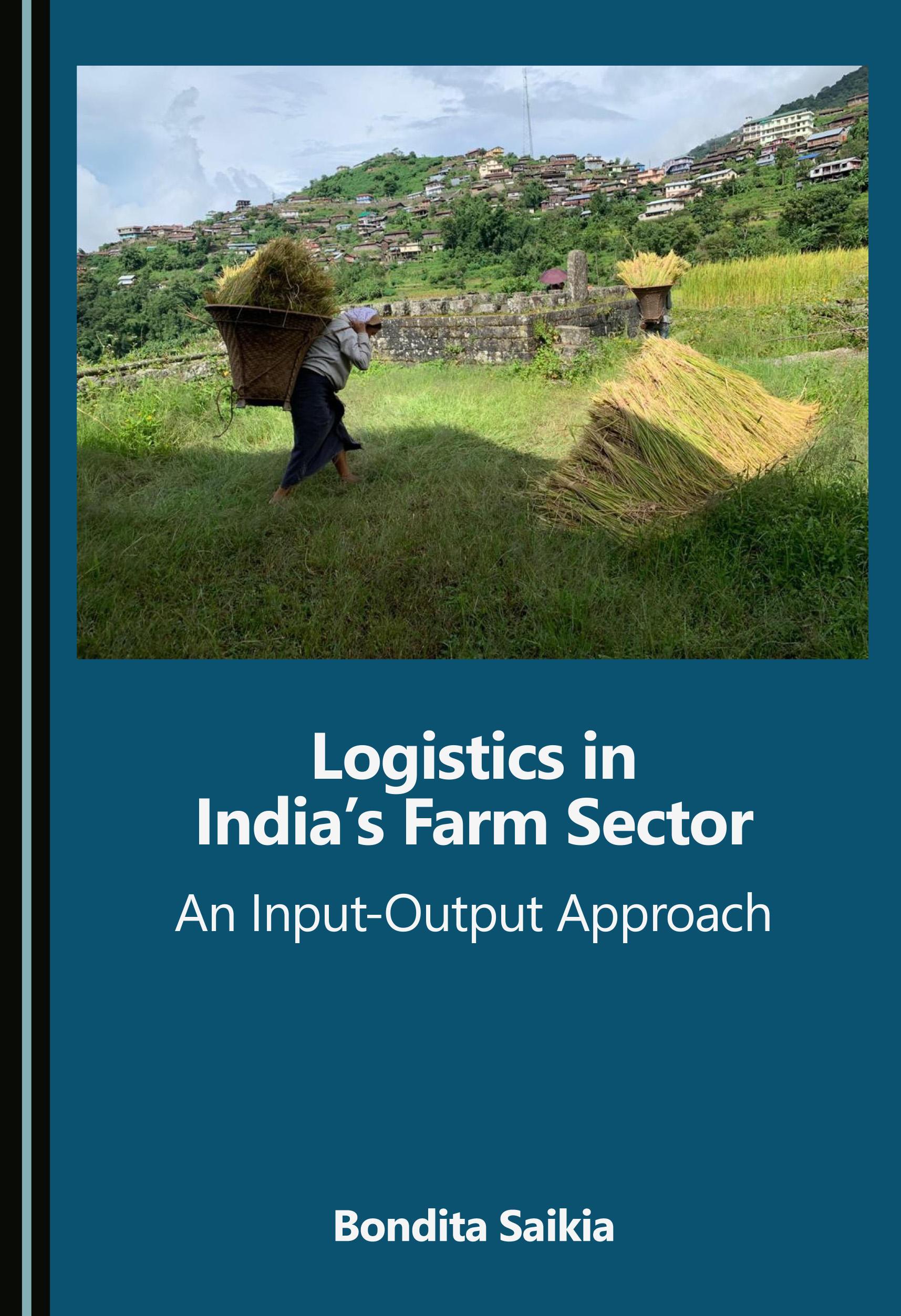
This book presents a rigorous and empirical exploration of the interlinkages between logistics infrastructure and agricultural development in India. The study employs the Input-Output framework to analyze sectoral linkages, focusing on how logistics services influence the performance and sustainability of the farm sector. Against the backdrop of declining agricultural productivity and persistent post-harvest losses, the book critically examines India’s logistics inefficiencies and their impact on agricultural output, pricing, and value addition. It emphasizes the role of infrastructure—roads, storage, financial services etc.—in shaping backward and forward linkages, drawing upon Hirschman’s theory of linkages and Leontief’s Input-Output modeling. The book also evaluates the elasticity of agricultural produce to logistics costs, providing quantitative insights that are vital for policy formulation. Through India’s Input-Output Transaction Table, complemented by global benchmarks such as the Logistics Performance Index (LPI), the author advocates for investments in logistics to enhance food security, improve market access, and promote development. Comprising theoretical exposition, empirical analysis, and policy recommendations, this book contributes to the fields of agricultural economics, development studies, and logistics management. It will be of interest to researchers, policymakers, practitioners, and students seeking to understand the dynamics of agricultural supply chains and the critical role logistics plays in enhancing inclusive and sustainable growth.