• 0 Items - £0.00
    • No products in the cart.

From £24.99

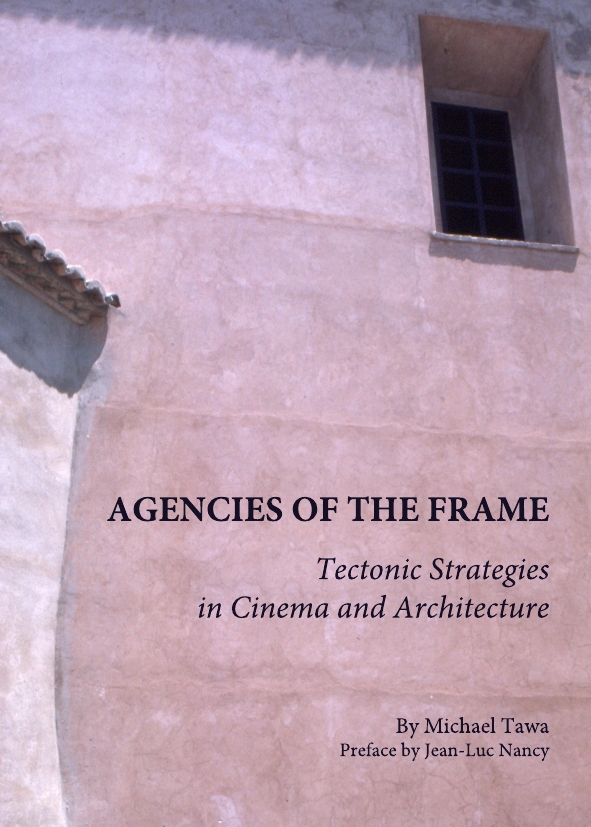
Agencies of the Frame

Tectonic Strategies in Cinema and Architecture
Michael Tawa

From £24.99

This book explores parallel tectonic strategies in cinema and architecture, analyzing how films and buildings compose place, space, time, and narrative. Analyses of works by Hitchcock, Lynch, Corbusier, and Zumthor reveal characteristics transferable across disciplines.

Agencies of the Frame: Tectonic Strategies in Cinema and Architecture aims to explore parallel approaches to the conceptualisation and composition of place, space, time, materiality…
From £24.99
From £24.99
Share

Agencies of the Frame: Tectonic Strategies in Cinema and Architecture aims to explore parallel approaches to the conceptualisation and composition of place, space, time, materiality and narrative in cinematographic and architectural practices. Beyond drawing useful implications for design, the book investigates a range of themes to mobilise a reconsideration of cinema and architecture as non-representational practices. It suggests that films and buildings can be read and designed as assemblages not directed to the formal expression of meaning, but to the framing of strategic and enabling conditions of emergent sense, realised within the tectonic and material conditions of the cinematic and the architectural as such. Succinct analyses of precedents in film, music, painting and architecture are used to foreground tectonic and compositional characteristics related to spatiality, temporality and narrative that are transferable across disciplines and practices. The thematic framework of the book engages theoretical material by Heidegger, Simondon, Deleuze, Nancy, Agamben and Stiegler. Classical modernist and postmodernist films by Dreyer, Antonioni, Hitchcock, Godard, Paradjanov, Tarkovski, Herzog, Lynch and Heneke are analysed side by side with important traditional, modernist and contemporary buildings, including works by Corbusier, Scarpa, Lewerentz, Zumthor and Markli. Illustrated with drawings and photographs by the author, the book should be of interest to practitioners and students of art, design, cinema and the built environment who wish to expand the creative scope and resonance of their work.

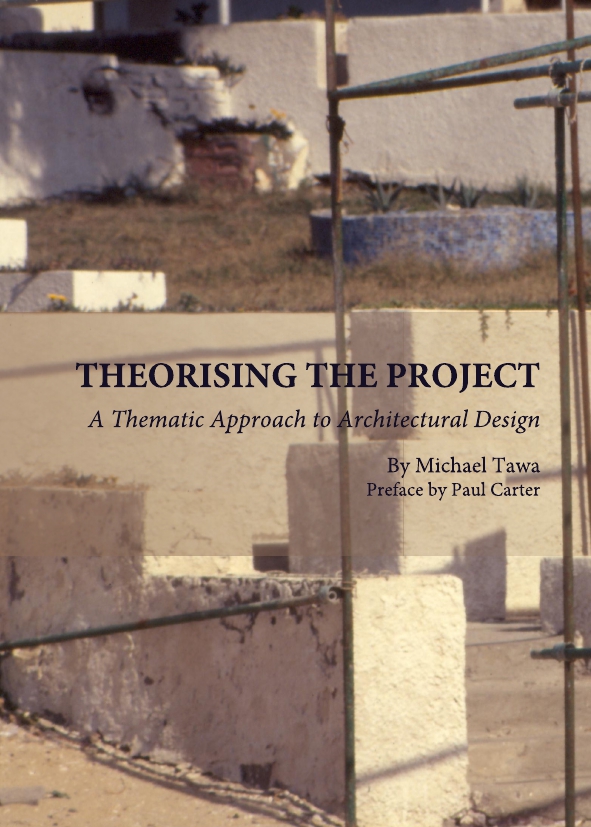
Michael Tawa is an architect and Professor of Architectural Design at Newcastle University, UK. He has practiced and taught architecture in Alice Springs, Adelaide and Sydney. His current projects include the web-based Design Lexicon, a forthcoming monograph, Theorising the Project, on theoretical strategies in design and research on the concept of translation in architectural design.

Hardback

  • ISBN: 1-4438-1745-7
  • ISBN13: 978-1-4438-1745-5
  • Date of Publication: 2010-01-11

Paperback

  • ISBN: 1-4438-2942-0
  • ISBN13: 978-1-4438-2942-7
  • Date of Publication: 2011-04-12

Ebook

  • ISBN: 1-5275-5470-8
  • ISBN13: 978-1-5275-5470-2
  • Date of Publication: 2011-04-12

Subject Codes:

  • BIC: AM, AMA, APFA
  • BISAC: ARC001000, ARC013000, ARC004000, ART009000, ART057000, ART008000
  • THEMA: AM, AMA, ATFA
360
  • “In this elegant, erudite work, Michael Tawa traces the points of intersection and difference between architecture and cinema, touching on the materiality of space, time, light and sound - how they are experienced, held in our memories, and reactivated. With great sensitivity and originality Professor Tawa draws on a range of theoretical perspectives offered by Heidegger, Deleuze, Derrida and Nancy, amongst others, putting them to work in his analysis of the built environment and cinema. Arguing that it is often the more discordant elements between disciplines that produce the most productive resonances, the reader is invited to imagine possibilities for enacting new opportunities for thinking, experiencing and making.
    - It is for this reason that Agencies of the Frame: Tectonic Strategies in Cinema and Architecture, provides such a valuable resource for emerging and established artists, architects and filmmakers, as well as a broader, critically engaged, reading audience.” —Dr. Elizabeth Presa, Head of The Centre for Ideas, Victoria College of Art, The University of Melbourne
  • “From my own philosophical perspective, Michael Tawa’s work presents a double interest which at the same time situates it at the heart of our fin de siècle contemporary theory:
    - 1) on the one hand, an interest at the level of sense (sense and not meaning), which constitutes, as we know, an acute question for our late modernity threatened by nihilism (or the negation of sense): by proposing the project of a ‘design lexicon’ which goes beyond all technical or thematic dictionaries, he aims to renew and displace the entire field of architectural reflection, firstly by the choice of terms, then by the treatment of their semantic, etymological, evocative or suggestive values. … 2) On the other hand, an interest as the question of being-in-common, that is to say the question of pre-political, pre-social plurality (or else beyond the social and political maybe) that makes of us (human beings, but also all beings) beings-with as essentially as they are, each one and in groups, singular beings. …

Meet The Author

Processing Your Order

Please wait while we securely process your order.
Do not refresh or leave this page.
You will be redirected shortly to a confirmation page with your order number.