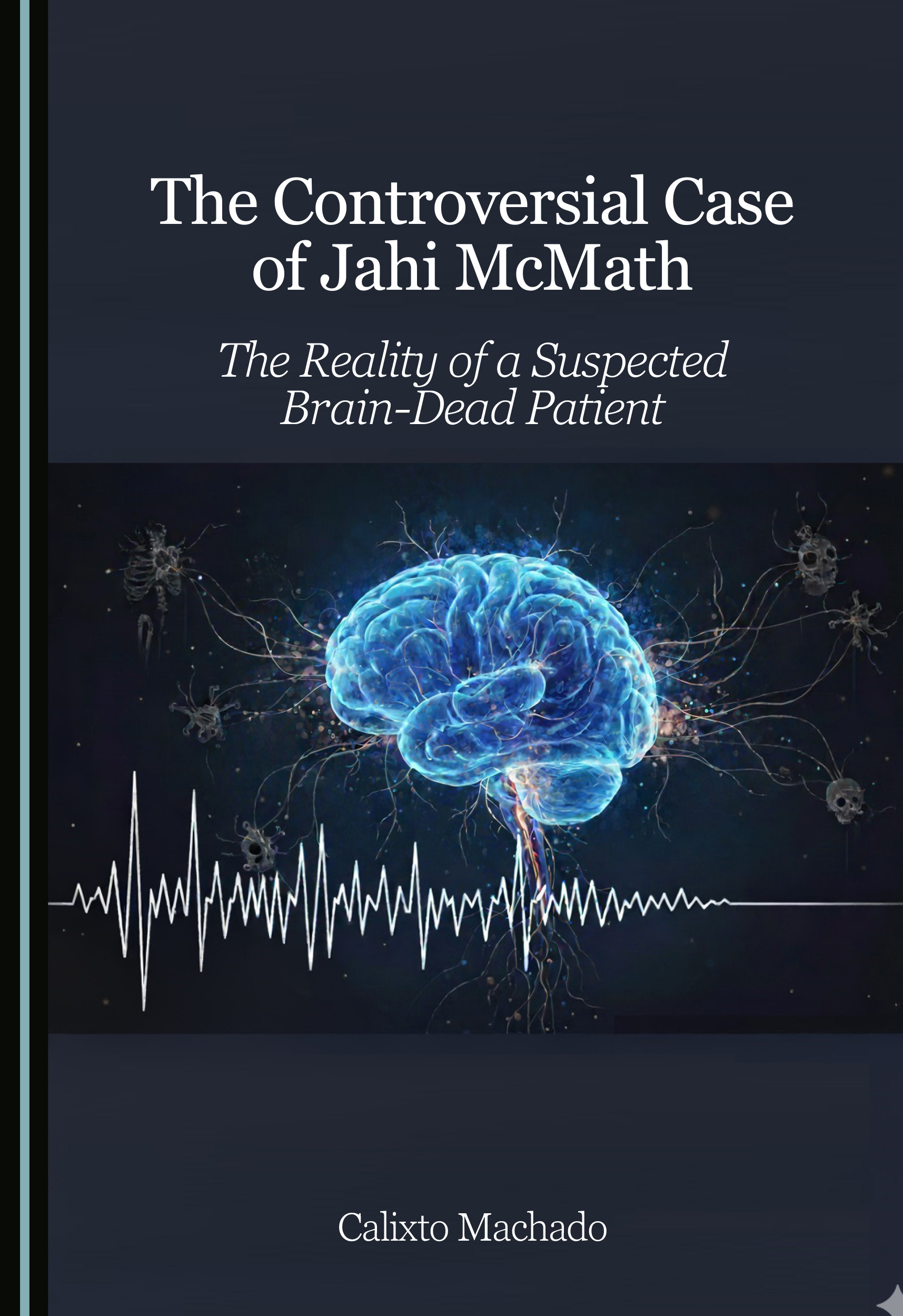
What if the most controversial “brain-dead” case of our time revealed that medicine has not yet reached the limits of consciousness?
When thirteen-year-old Jahi McMath was declared brain dead, her story ignited an international debate. The headlines focused on conflict and controversy—but behind them lay a more profound truth. As the first neurologist to study her brain, the author discovered signs that contradicted the accepted diagnosis. Jahi was not brain-dead. She was in a state no one had yet described, what the author came to call Responsive Awake Syndrome.
For more than a decade, these findings were dismissed, ignored, or met with skepticism. Only after years of persistence did the medical community begin to recognize what Jahi’s case had already revealed: that our categories of consciousness are incomplete, and that medicine has not yet reached the limits of the human brain.
This book is both a scientific exploration and a personal testimony. It tells the story of a young girl who became a symbol, and of a physician who, guided by evidence and by conscience, stood in the eye of the storm.
Jahi McMath’s journey compels us to reconsider the boundaries between life and death, to question long-accepted dogmas, and to embrace the humility required when science confronts the mysteries of consciousness.