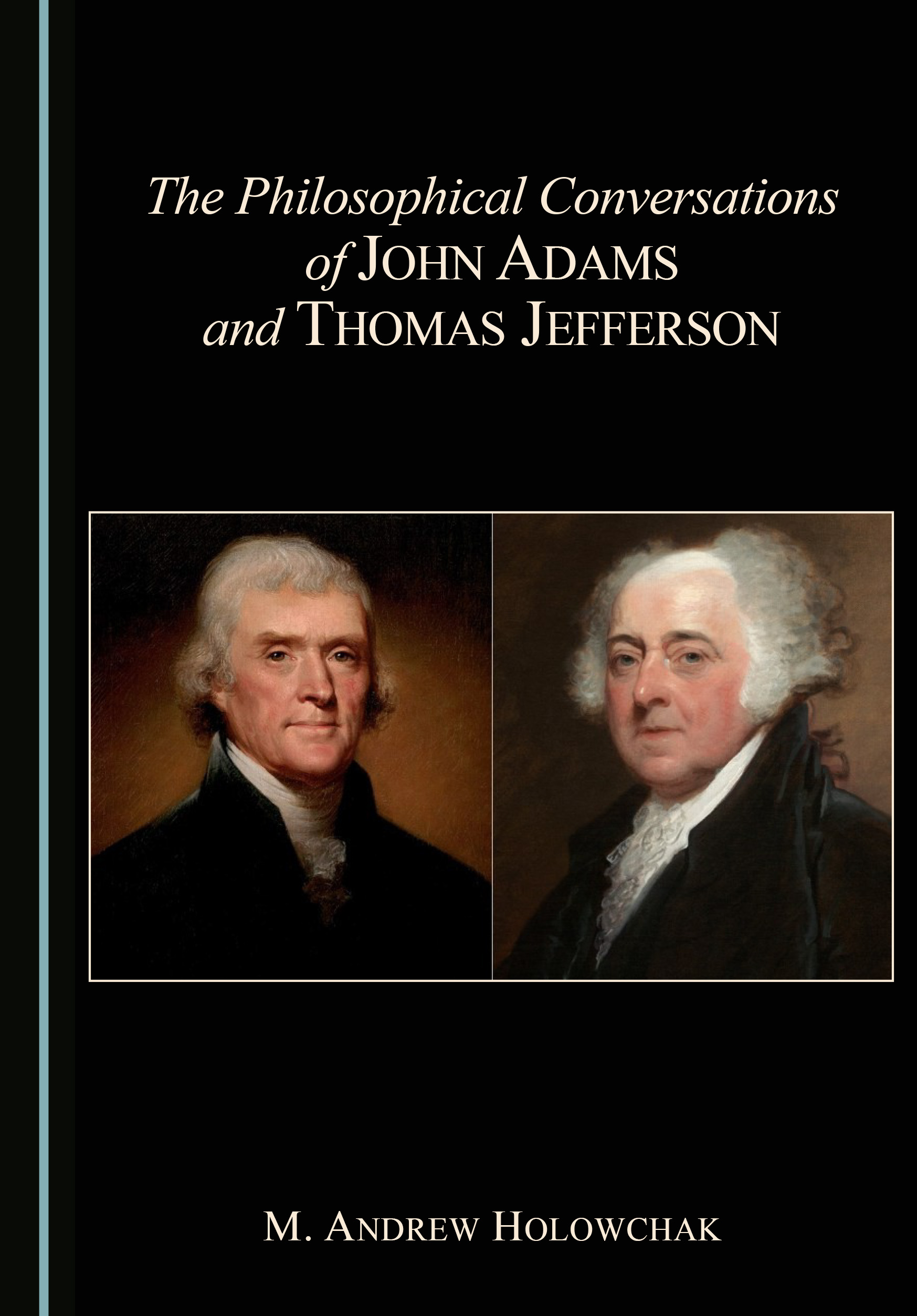
On January 1, 1812, and at the urging of Dr Benjamin Rush, John Adams penned a short, cordial letter to Thomas Jefferson in an effort to resume a correspondence that ended on March 24, 1801; due to political differences between the two, Jefferson replied with a lengthy letter on January 21 in which he broached a number of issues that flooded his mind. That resumed correspondence—rich in substance politically, historically, and philosophically, and full with mutual respect and love—would prove to be unlike any other in American history.
One of the unexplored characteristics of that correspondence, cornucopian to scholars, is its philosophical substance. Both men, though neither were philosophers, spent much of their leisurely time reading philosophy and their letters, upon resumption of their correspondence, are teeming with philosophical content.
That content has never been the subject of a book-length manuscript, until now. In this book, the author offers a critical analysis of the philosophical wisdom of the two Founders. He covers “heavy” conversation—topics include God, the meaning of life, the hereafter, and the function of grieving—in prose that is light, lively, and engaging and accessible to non-philosophers as well as philosophers.