
Plants and their Environment
from the Cellular to Molecular Level
This book describes the relationship of the plant to its environment, from the cellular to molecular levels. It explains how plants live, function, and grow under stress, covering life processes, climate change adaptation, and the role of crops in our food supply.
This book describes the relationship of the plant to its environment, from the cellular to molecular levels. It explains how plants live, function, and grow under stress, covering life processes, climate change adaptation, and the role of crops in our food supply.
View more
This product has multiple variants. The options may be chosen on the product page
Emerging Trends in Entomology
Challenges and Opportunities
Entomology stands at a critical crossroads. This timely exploration covers the most pressing issues, from pollinator decline and climate change to groundbreaking research and state-of-the-art methodologies. A vital resource for navigating the future of insect science.
Entomology stands at a critical crossroads. This timely exploration covers the most pressing issues, from pollinator decline and climate change to groundbreaking research and state-of-the-art methodologies. A vital resource for navigating the future of insect science.
View more
This product has multiple variants. The options may be chosen on the product page
£86.99
Nanotechnology is the catalyst transforming how we detect, protect, and sustain our world. This book illuminates cutting-edge research and charts a visionary path for leveraging nanotechnology to address global challenges in the environment, food safety, and agriculture.
Nanotechnology is the catalyst transforming how we detect, protect, and sustain our world. This book illuminates cutting-edge research and charts a visionary path for leveraging nanotechnology to address global challenges in the environment, food safety, and agriculture.
View more
This product has multiple variants. The options may be chosen on the product page
£86.99
To ensure global food security amid escalating climate challenges, this book presents innovative approaches to enhance crop performance under stress. It details advanced physiological, molecular, and breeding methods to develop resilient, climate-smart cropping systems.
To ensure global food security amid escalating climate challenges, this book presents innovative approaches to enhance crop performance under stress. It details advanced physiological, molecular, and breeding methods to develop resilient, climate-smart cropping systems.
View more
This product has multiple variants. The options may be chosen on the product page
£86.99
This book explores plant physiology, explaining how plants live, function, and grow. Based on the latest research, it covers key life processes, climate change adaptation, and transgenic crops. This book will be of particular interest to university students.
This book explores plant physiology, explaining how plants live, function, and grow. Based on the latest research, it covers key life processes, climate change adaptation, and transgenic crops. This book will be of particular interest to university students.
View more
This product has multiple variants. The options may be chosen on the product page
£89.99
Revolutionize the aquaculture industry. As global protein demand soars, this book provides a roadmap to sustainable production. Learn to maximize output while minimizing environmental impact, balancing efficiency with stewardship for a resilient, eco-friendly future.
Revolutionize the aquaculture industry. As global protein demand soars, this book provides a roadmap to sustainable production. Learn to maximize output while minimizing environmental impact, balancing efficiency with stewardship for a resilient, eco-friendly future.
View more
This product has multiple variants. The options may be chosen on the product page
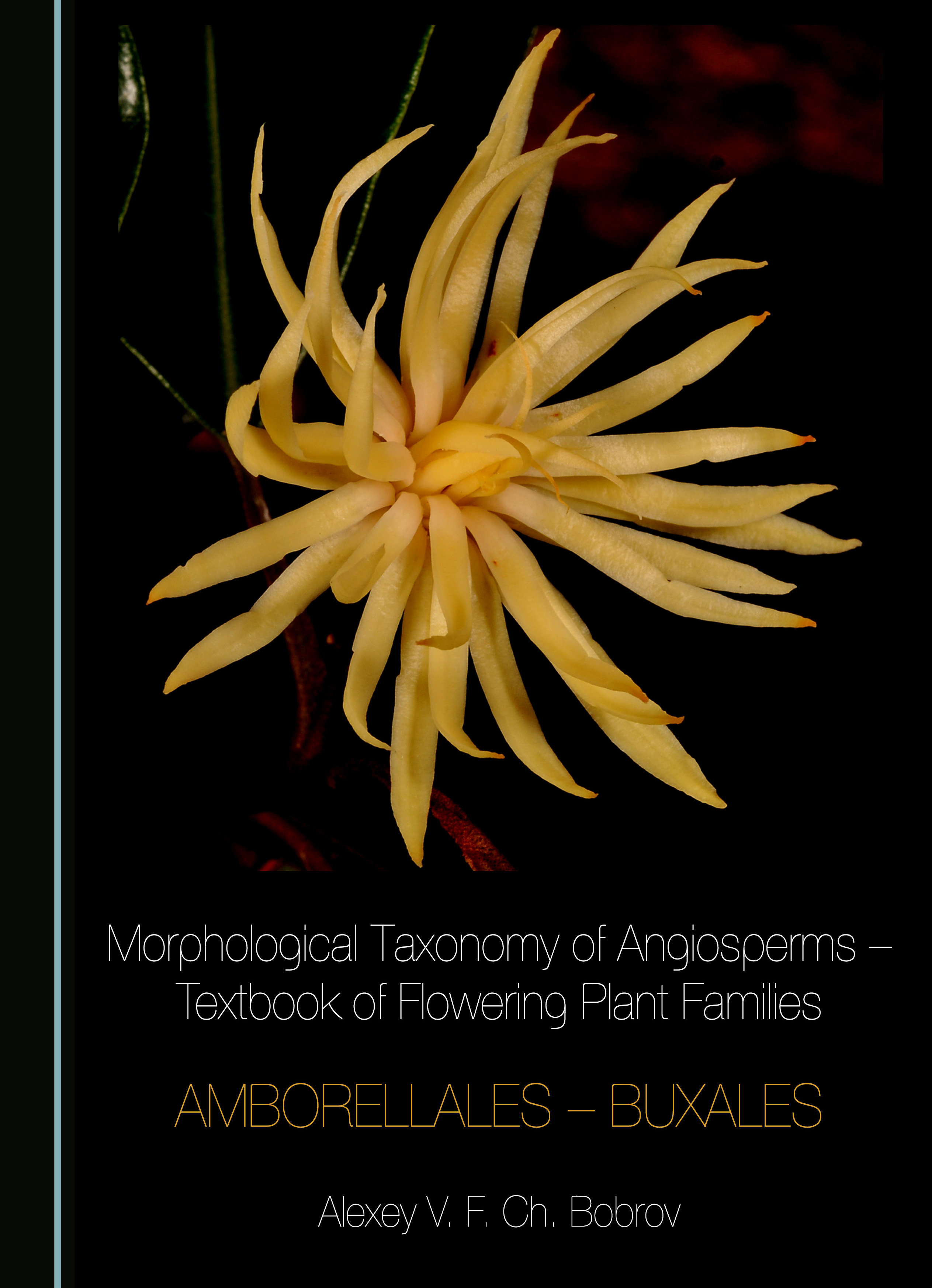
Morphological Taxonomy of Angiosperms – Textbook of Flowering Plant Families
Amborellales – Buxales
This book describes the morphological characters of all 419 modern angiosperm families and over 900 morphological groups. Illustrated with original photos for identification, it is an essential guide for taxonomists, evolutionary biologists, conservationists, and students.
This book describes the morphological characters of all 419 modern angiosperm families and over 900 morphological groups. Illustrated with original photos for identification, it is an essential guide for taxonomists, evolutionary biologists, conservationists, and students.
View more
This product has multiple variants. The options may be chosen on the product page