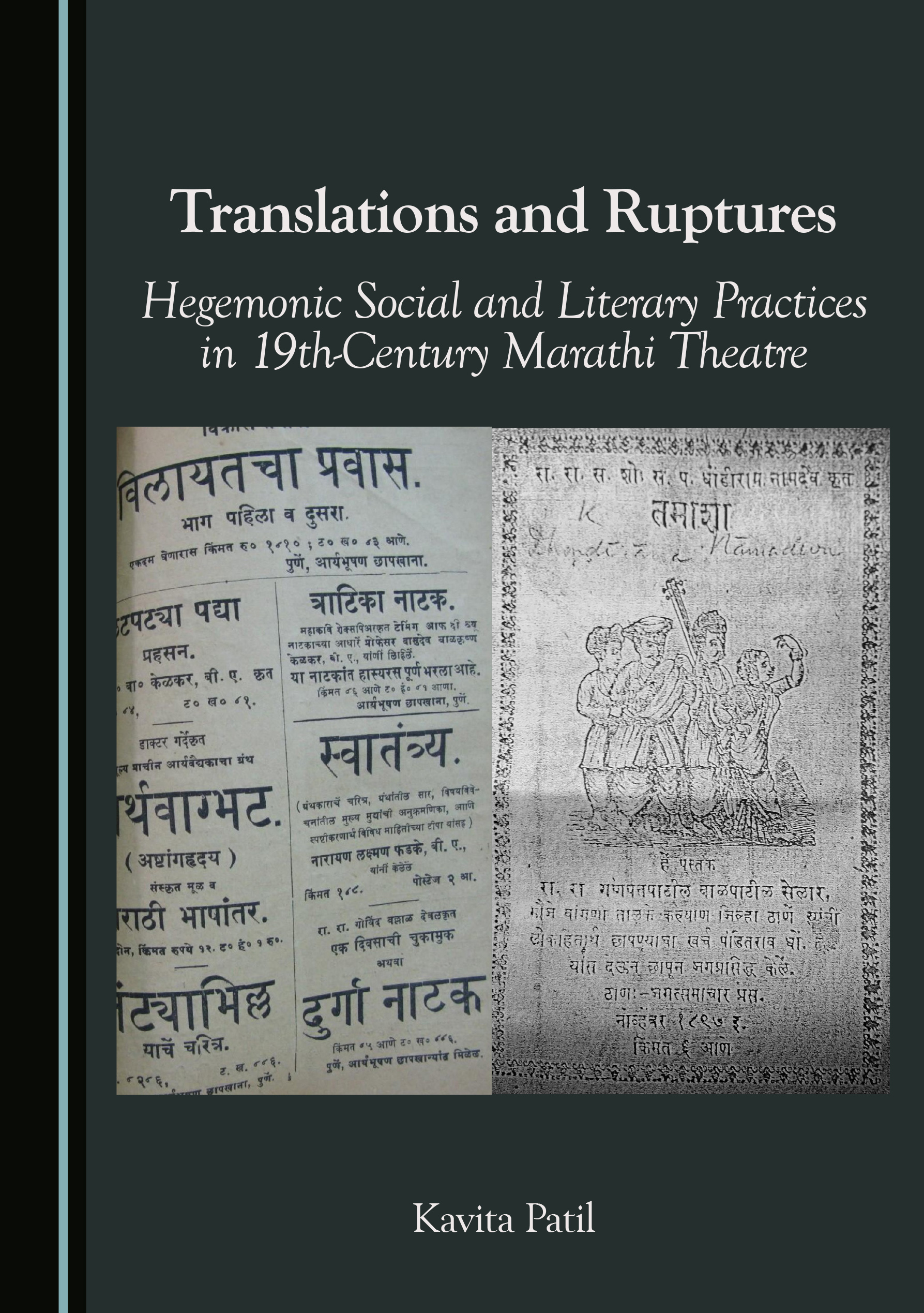
This book examines the complex interplay between translation, theatre, and social reform in nineteenth-century Maharashtra, foregrounding how practices of literary translation fashioned and challenged modernity. By studying over a hundred Marathi translations of European plays alongside Jotirao Phule’s Tritiya Ratna and Satyashodhak Jalsa performances, it interrogates the politics of representation and the imperatives of cultural transfer. The book argues that translation functioned not only as a literary activity but as a metaphor structuring hegemonic and counter-hegemonic discourses in parallel theatrical traditions. Drawing on concepts of rupture (Foucault), hegemony and intellectuals (Gramsci), and afterlife (Benjamin), it situates mainstream theatre as complicit in sustaining caste hierarchies while illuminating the radical, though limited, potential of counter-discourses. Combining archival research with theoretical insights, this study contributes to debates on vernacular modernity, gender, caste, and the politics of performance, inviting readers to rethink translation as both an instrument of domination and a tool for emancipatory possibilities.