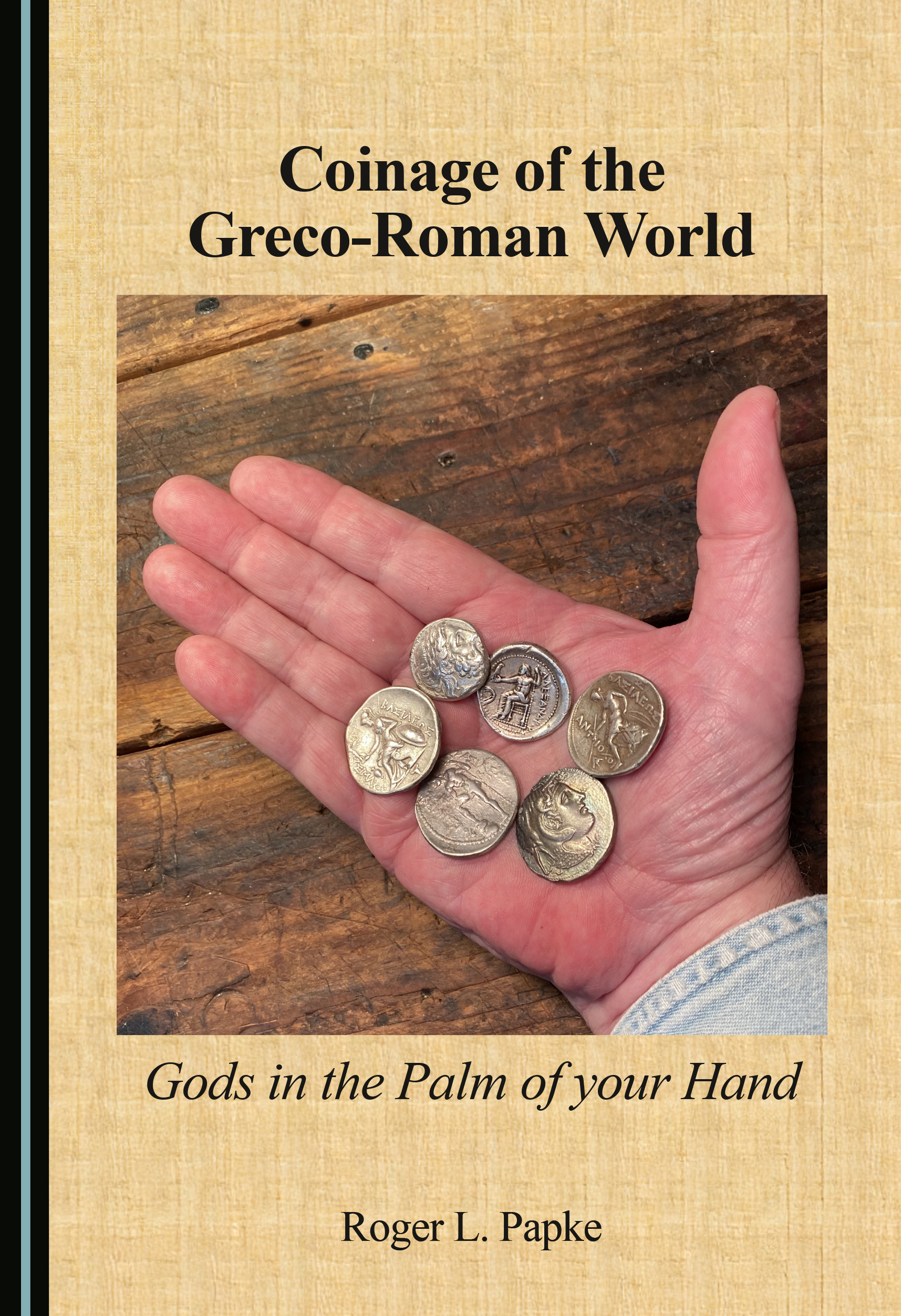
This book is primarily a narrative of Greco-Roman history illustrated with coins. Coins are associated with commerce, both domestic and international, but they are also ethnography, reporting the icons and images of the peoples using them. Looking at these ancient coins you see the images of gods that you can place in the palm of your hand. The book has Greco-Roman coins from their earliest days up through the last Roman Emperor of the East to worship pagan deities. The book covers the historical background of the cultures that produced these objects and the historical transitions from the time that the Greek city-states fought the Persians in 490-480 BCE through the rise and fall of the subsequent empires of Athens, Alexander the Great, the successor Hellenist empires, Rome, and various people who lived on the edge of these great empires. Some of the coin images tell intimate histories of individuals and their personal ambitions. The epilogue is a discussion of how the Roman allegorical goddess of Liberty became an icon for the world’s transition into the modern age, present still on the coins of France, the United States, and almost every Latin American country.