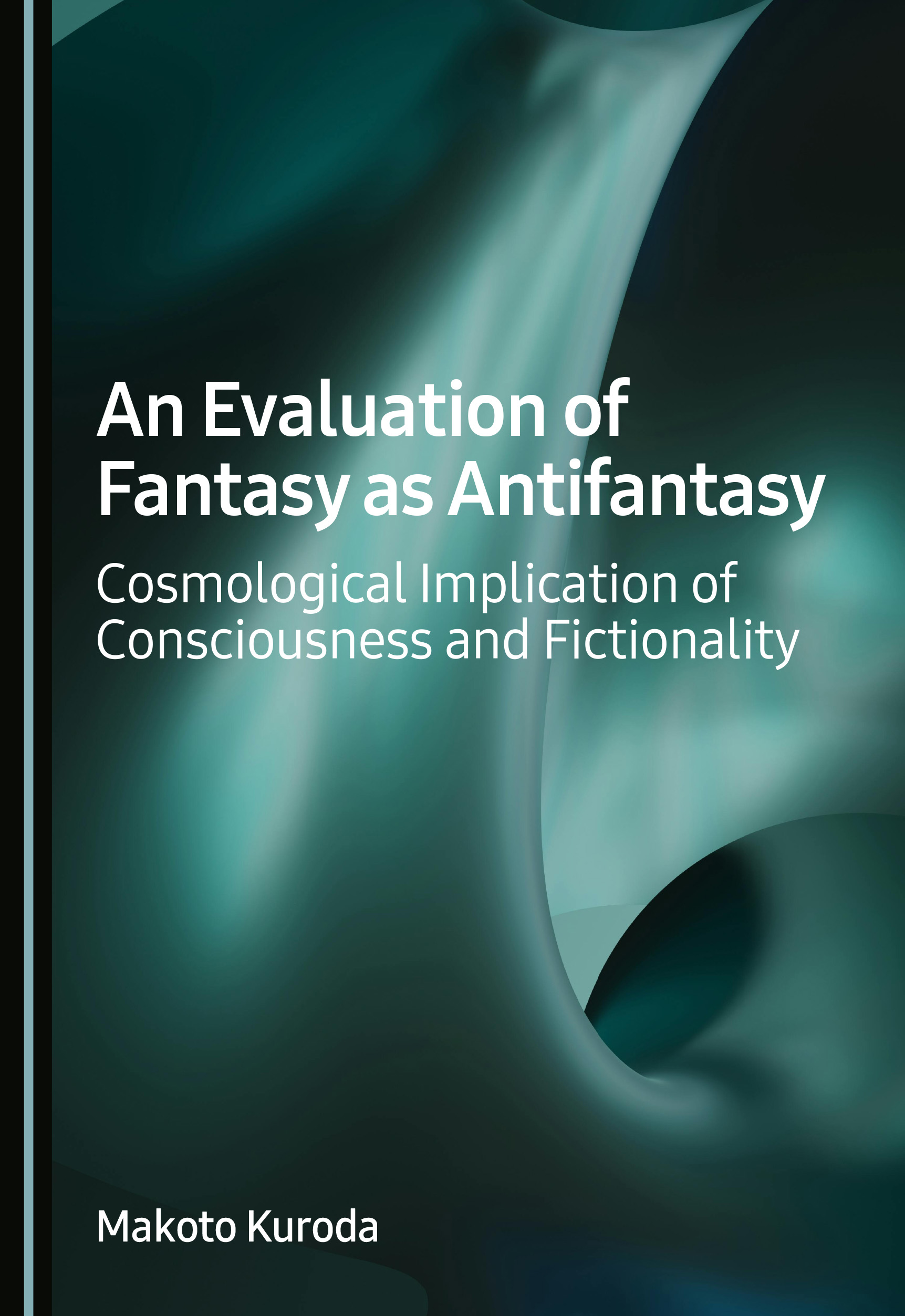
Makoto Kuroda’s study challenges a philosophical innovation that bridges fictionality, consciousness, and cosmology into a unified framework. His work explores how fictional narratives and the structures of consciousness are not merely subjective or artistic constructs but are deeply intertwined with the fabric of the universe itself. It is closely related with other broader research and writings of contemporary subculture. His work proposes that fictionality–the creation and experience of imagined worlds–is not just a human activity but a fundamental aspect of reality with cosmological significance. It argues that fictional narratives reflect a speculative function of consciousness that mirrors the universe’s capacity to generate meaning and possibility. This departs from traditional views of fiction as mere entertainment or illusion, positioning it instead as a mode of cosmological speculation. By analyzing works like James M. Barrie’s Peter and Wendy and Peter S. Beagle’s The Last Unicorn, it suggests that fiction reveals hidden structures of reality, such as synchronicity and the interplay of matter and mind, which challenge the mechanistic, scientific worldview.